What was measured
In human skin explants, carnosine in solution cut CML formation by 64% in the epidermis and 41% in the reticular dermis, and pentosidine by 48% and 42%.
Topical carnosine is carnosine — a dipeptide of beta-alanine and histidine — applied to skin rather than swallowed. It is sold as two unrelated things: a gel athletes rub on legs before hard efforts, and a cream applied to the face against glycation. Same molecule, different concentrations, different outcomes, and two literatures that never cite each other.
| Sports gel | Skincare | |
|---|---|---|
| What it is for | Power output and recovery | Glycation, firmness, elasticity |
| Where it goes | Quads, calves, shoulders | Face and neck |
| Typical concentration | Rarely published; one brand states 4% | 0.05–2% in cosmetic use |
| Time to any effect | 45 minutes | 8 weeks |
| What is measured | Peak power in repeated sprints | AGE formation, hydration, elasticity |
| Best evidence | Triple-blind crossover, n=7 athletes | Skin explants plus 33 women over 56 days |
| Sold as | A gel you pump | A cream or serum |
The rest of this page covers both. The sports half is what we sell and what the rest of this site is about. The skincare half we do not sell and have no stake in, which is the only reason to trust our summary of it.
The idea is buffering. Hard efforts make muscle acidic. Carnosine is one of the things muscle uses to soak that up, and more of it in the muscle means a little more work before the burn stops you. The usual way to raise it is oral beta-alanine over four weeks. The gel claims to skip the wait.
Four trials have tested that claim. Three report a benefit, one found nothing, and two of the three positive ones share authors with the manufacturer.
The one worth your attention is 2025: triple-blind, seven world-class rugby sevens players, and — the part that matters — a placebo matched for 1.25% menthol so both bottles tingled the same. Peak power came out 8–12% higher on the gel. Mean power, heart rate and perceived effort did not move at all. Four of the seven players finished convinced the placebo day had been their better one.
Here carnosine is doing something else entirely. Sugars bind to collagen over time and form advanced glycation end-products, which make skin stiffer and duller. Carnosine interferes with that reaction. The target is not power — it is the crosslinking.
In human skin explants, carnosine in solution cut CML formation by 64% in the epidermis and 41% in the reticular dermis, and pentosidine by 48% and 42%.
Thirty-three women aged 45–65 used a carnosine cream for 56 days: firmness up 29%, elasticity up 20%, hydration up 12%, sagging jawline down 7%.
Cosmetic formulations run roughly 0.05–2%. That is one to two orders of magnitude below what a sports gel is reaching for.
Most trials test a full formulation, not carnosine alone, so how much of the result belongs to carnosine and how much to the other actives is usually unresolved.
If that is what you came for, buy a skincare product and not this gel. A sports gel is formulated to cross into muscle, is frequently mixed with menthol, and has never been tested on facial skin for anything. We sell the gel and this is still the honest answer.
Carnosine research splits into at least four bodies of work that do not transfer to each other: oral supplementation, carnosine eye drops, carnosine in skincare, and this one topical sports gel. They differ on route, on dose, on tissue and on what was measured.
Grams per day, swallowed, mostly broken down by serum carnosinase before it arrives. Studied for diabetes, cognition and ageing. Nothing about muscle power from a gel.
N-acetylcarnosine, delivered to the lens. A different molecule, a different tissue and a different endpoint.
0.05–2% on facial skin, measured against glycation over weeks. Real research, and no bearing on what happens in a quadriceps.
Four trials. Peak power in repeated sprints, measured over minutes. This is the only literature that is about the product athletes buy.
A page that lists all four under one heading is padding its evidence, not building it. If you see a gel cited alongside cognition or anti-ageing findings, check which route and which dose produced them before you count them. On this site the sports gel is the only literature we treat as evidence for the sports gel.
Neither literature has shown what happens after the molecule crosses the skin. No trial has measured intramuscular carnosine in a human after topical application — the only direct absorption evidence in any species is from horses, and it comes from a paper sharing authors with a manufacturer-linked efficacy study. The skincare work measures the chemistry it interrupts rather than the carnosine that arrives. Both sides infer the middle step.
That is not a reason to dismiss either. It is the reason to read the measured outcome rather than the mechanism story, in both halves.
The sports half: the triple-blind trial, the menthol-matched placebo and the 8–12% peak power figure.
The skincare half: the CML and pentosidine reductions in explants, and the 56-day results in 33 women.
An example of the formulation problem: hydration up 15.2% and elasticity up 22.6%, from a product containing carnosine among other actives rather than carnosine alone.
Every trial of the sports gel, with design, sample size and author affiliations, is on the evidence page. What people who use it report is on the results page, how to apply it is on the protocol page, and where to buy it covers the price per session.
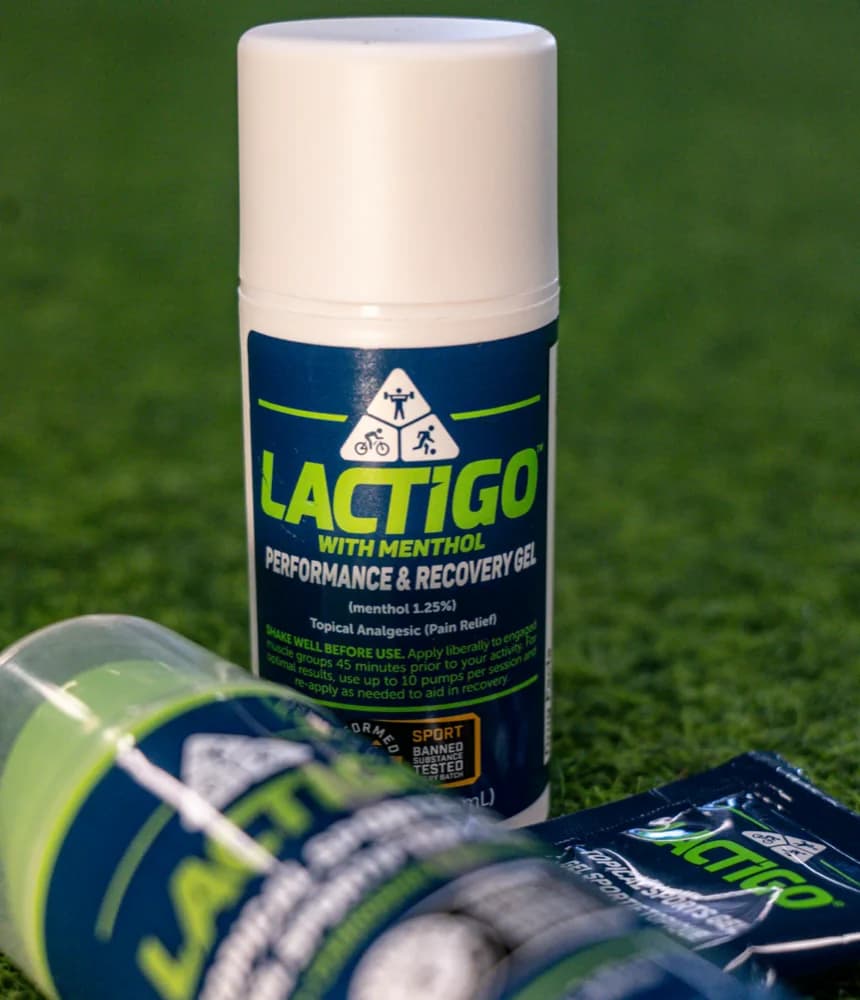
LactiGo Performance & Recovery Gel
Ten pumps a leg, forty-five minutes out. That is the whole method.
Affiliate links. We earn a commission if you buy — it costs you nothing extra and does not change what we publish.