is carnosine gel just menthol
The strongest evidence came from horses.
Topical carnosine raised muscle carnosine up to 76% in horses — the only direct proof it crosses skin. Read the author list first.
Short answer
Topical carnosine raised equine muscle carnosine concentration by up to 76% in a 2021 study — the only published evidence in any species that the molecule crosses skin and arrives in muscle. Every human paper in this field leans on it, because it is the only work testing the step the others assume. Read the author list before you weigh it: Macias and Sharpe also wrote the 2016 paper evaluating the branded gel as an ergogenic aid, the source of the 4% figure on the manufacturer’s homepage. The proof that it gets in and the proof that it works come from the same desk. A horse is a defensible place to test absorption. Equine muscle is well mapped, biopsies are routine, and a horse cannot talk itself into a placebo effect. But horse skin is not human skin, and a rise in muscle carnosine is not a performance result. No controlled trial of the gel on equine performance exists.
What the study measured
Dieter, Macias, Sharpe and colleagues rubbed carnosine on a horse and then measured how much had reached the muscle. Up to 76% more. Every human paper in the field cites it. It is the only study that tests the step the rest of them take on faith.
Why a horse is a reasonable place to test this
Equine muscle is well mapped. Biopsies are routine in horse sport. And a horse cannot talk itself into a placebo effect. The question here is narrow — did the stuff get in — and for that narrow question those are real advantages. A human trial measures performance and then guesses at the step in the middle.
The limits are just as plain. Horse skin is not human skin: different thickness, different hair. And a rise in muscle carnosine is not a win on the track. No one has run a controlled trial of the gel on horse performance at all.
If you are thinking about it for a horse
- Talk to your vet first. This is a topical product on an animal you are responsible for, and nothing here is veterinary advice.
- Check your governing body. Rules on topical preparations differ, and the burden sits with the owner.
- Do not copy the human protocol. The 10 ml per leg, 45 minutes out figure comes from human trials. There is no equine equivalent in the literature.
- Expect no performance data. Absorption is established. Benefit is not.
Sources
- Transdermal delivery of carnosine into equine skeletal muscle (Comparative Exercise Physiology, 2021) (opens in a new tab) 10.3920/CEP200077
The equine absorption paper — the only direct evidence that topical carnosine reaches muscle, in any species.
- Evaluation of the efficacy of LactiGo™ topical gel as an ergogenic aid (Journal of Exercise Physiology Online, 2016) (opens in a new tab) J Exerc Physiol Online 19(3):15–23
Shares authors with the equine paper, which is why the author list matters before weighing either.
- FEI Clean Sport — Equine Prohibited Substances List (opens in a new tab) inside.fei.org
Rules on topical preparations differ by governing body and the burden sits with the owner.
Ready to try it
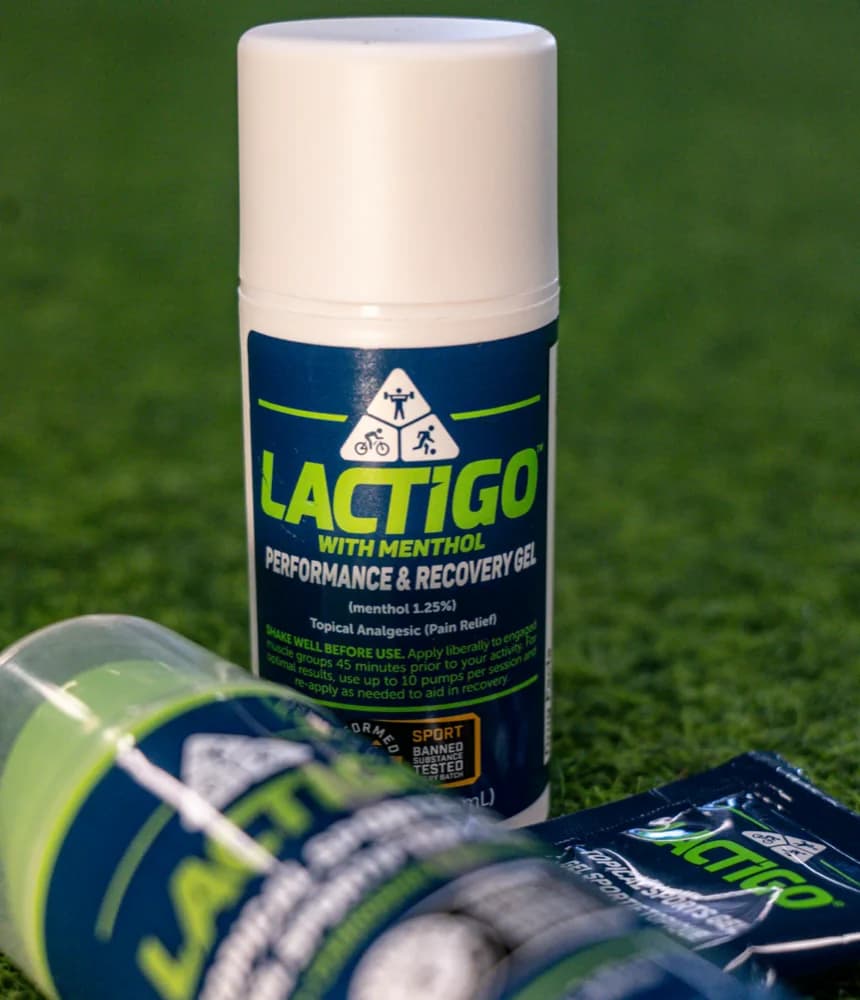
LactiGo Performance & Recovery Gel, $55 for with menthol · 100 ml. Informed Sport tested, 30-day money-back guarantee.
Other questions
carnosine gel vs beta alanine
Carnosine gel vs beta-alanine
does carnosine gel work
Does carnosine gel work?
lactigo vs carnosport
LactiGo vs Carnosport
best carnosine gel
The best carnosine gel
carnosine gel for bjj
Carnosine gel for BJJ
carnosine gel australia
Carnosine gel in Australia
carnosine gel side effects
Carnosine gel side effects
carnosine gel vs biofreeze
Carnosine gel vs Biofreeze
The product
Try it yourself
LactiGo Performance & Recovery Gel
Ten pumps a leg, forty-five minutes out. That is the whole method.
$55with menthol · 100 ml · about 5 sessions
Affiliate links. We earn a commission if you buy — it costs you nothing extra and does not change what we publish.
- Informed SportEvery batch tested
- 30 daysMoney-back guarantee
- 16,500+Athletes using it
- 45 minTo effect