
is carnosine gel just menthol
Carnosine gel vs Biofreeze: more menthol, zero carnosine.
Carnosine gel vs Biofreeze: Biofreeze is a 4% menthol pain rub with no carnosine. Carnosine gel eases minor aches too and is the one tested for peak power.
Affiliate links. We earn a commission if you buy — it costs you nothing extra and does not change what we publish.
Short answer
Biofreeze is a 4% menthol rub with no carnosine and no performance trials. The carnosine gel’s label also covers minor muscle aches, and in a 2025 triple-blind trial, seven international rugby sevens players produced 5–10% more peak power on it than on a placebo with the same menthol, per the authors.
Biofreeze is a menthol rub: 4% menthol, no carnosine, and no performance trials. The carnosine gel does what Biofreeze does — its label covers temporary relief of minor muscle aches — and then goes further. It contains carnosine, and in a 2025 triple-blind trial on seven international rugby sevens players it delivered 5–10% more peak power than a placebo containing the same menthol. That last detail is the key: if menthol were what mattered, the menthol-matched placebo would have done just as well. It did not. Sprint 7 peak power was 1426 W on the gel against 1270 W on placebo. Mean power did not change, and only seven players finished, but in that trial menthol alone did not produce the gain. If you want cooling, any rub will do. If you want the one rub tested for peak power in repeated sprints, that is the carnosine gel.
How do Biofreeze and carnosine gel compare?
Biofreeze is a cooling pain-relief rub; the carnosine gel is a tested performance product whose label also covers temporary relief of minor muscle aches. Both put menthol on your skin. Only one puts carnosine there, and only one has been tested for what it does to your power.
| Biofreeze | Carnosine gel | |
|---|---|---|
| Carnosine | None | Yes — the formula tested in the 2025 trial |
| Menthol | Menthol USP 4% (gel and roll-on) | 1.5% on the current label (1.25% in the trial product); menthol-free version available |
| Relief of minor muscle aches | Yes | Yes |
| Performance trials | None | Triple-blind trial on seven international rugby sevens players |
| Beat a menthol-matched placebo | Not tested | Yes — 5–10% more peak power (n=7); no change in mean power |
| Skin side effects (label) | Can irritate skin; stop if it does | Can irritate skin; stop if it does (menthol-free version available) |
| Informed Sport tested | Not stated | Every batch |
| Other ingredients of note | Camphor, arnica, boswellia, green tea, aloe | Magnesium sulphate |
| Formats | Gel tube, gel pump, roll-on, spray, cream, patch | 100 ml pump bottle, with or without menthol |
| Directions | Thin film on the affected area, up to 3–4 times a day | 10 ml per leg, 45 minutes before the hard effort |
| Where to buy | Walmart, Amazon, Target, CVS, Walgreens | The official store |
| When to use | When it already aches | 45 minutes before the hard effort |
How much menthol is in carnosine gel vs Biofreeze?
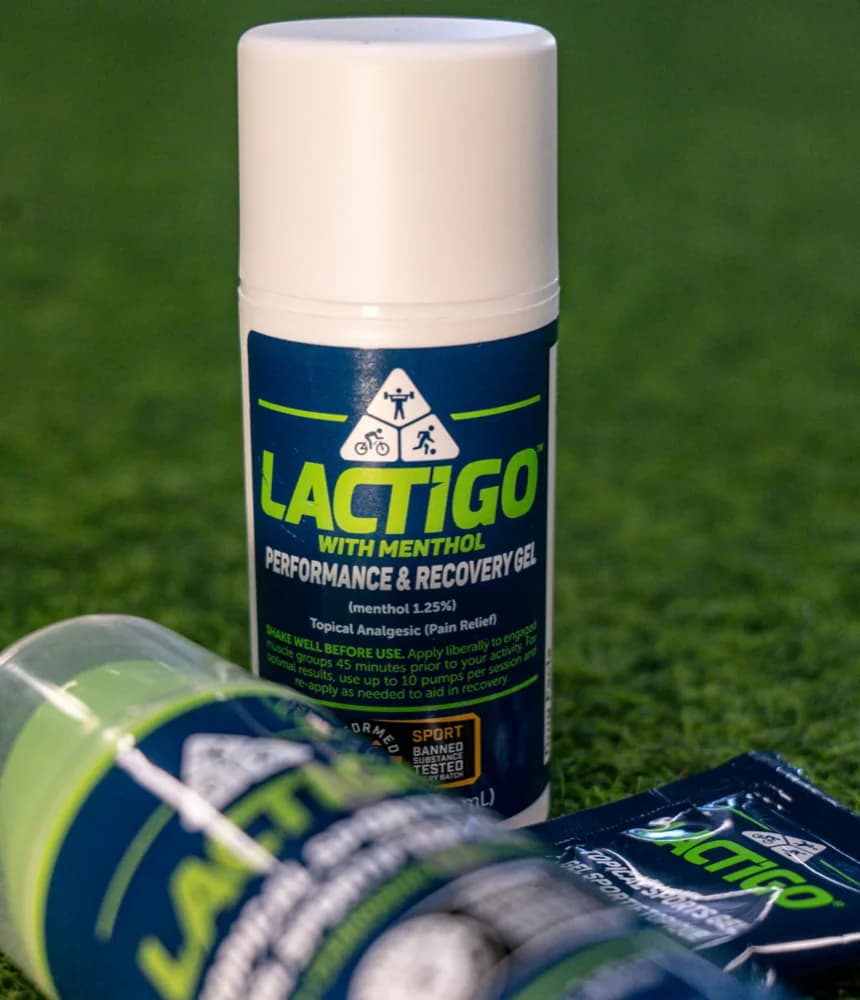
Biofreeze has more: menthol 4% in both the gel and the roll-on, against 1.5% on the current label of the carnosine gel. The version tested in the 2025 trial listed 1.25%, and there is a menthol-free version for people who do not want the tingle at all.
Menthol is the active ingredient on both labels, and it is there for the same reason: it stimulates the cold receptors in your skin. Biofreeze explains its own formula this way — it produces “a cold sensation overriding the pain signals” before they reach the brain. That is a sensation effect, and a useful one when something aches. It changes nothing about the chemistry inside a working muscle.
So 4% versus 1.5% tells you which bottle feels colder. It does not tell you which one helps you perform. For that you need a trial — and only one of these two products has one.
What is in Biofreeze and the carnosine gel?
Biofreeze is menthol plus a long list of botanicals; the carnosine gel is menthol plus carnosine and magnesium. The Biofreeze roll-on lists menthol 4% as its only active ingredient. Its inactive ingredients include aloe, burdock root, arnica, boswellia, calendula, green tea, yerba maté and lemon balm extracts, camphor, isopropyl alcohol — which is why the label says “flammable” — and two colourings, Blue 1 and Yellow 5.
The gel’s list is shorter, and every headline ingredient has a job. Carnosine is the ingredient the trials study: a dipeptide your muscle already stores, applied to the skin over the working muscle. Magnesium sulphate is in the base. Menthol at 1.5% is the active ingredient on the label — the topical analgesic for minor muscle aches, and the tingle you feel.
Botanical extracts make a label look busy. None of them is carnosine, and none of them has been tested for power.
Does more menthol mean more performance?
No. Menthol on skin gives a small, mostly perceived cooling effect, mainly in endurance work. It feels good. The one trial that matched menthol in the placebo still found 5–10% more peak power on the carnosine gel, so menthol alone does not explain that result.
The wider research says the same. A systematic review and meta-analysis of acute topical menthol and exercise performance found a small effect, mostly in endurance work and mostly in how the effort feels. Turning the menthol up from 1.5% to 4% makes the cooling stronger; it does not change what menthol is.
The 2025 trial took the menthol out of the argument. The placebo was gel spiked with the same menthol as the real gel, so both bottles smelled and tingled the same. Seven international rugby sevens players did twelve maximal sprints on each. Peak power was higher on the carnosine gel — 1433 W vs 1332 W in sprint 2, 1347 W vs 1244 W in sprint 4, 1426 W vs 1270 W in sprint 7. Four of the seven even thought the placebo day had been their better one.
Why does muscle cream burn or tingle?
Because menthol stimulates the cold-sensing nerve endings in your skin, and at higher strengths that cold can register as a tingle or a mild burn. It is the sensation the product is built to create, not a sign that anything is reaching the muscle. Biofreeze pairs its 4% menthol with camphor; the carnosine gel uses 1.5% menthol, so it tingles less.
Is muscle cream supposed to burn? A tingle, yes. Real pain, no. The Biofreeze label draws the line clearly: do not apply it to wounds, damaged or irritated skin, do not bandage tightly or use it with a heating pad, and stop and ask a doctor if you get pain, swelling or blistering. The carnosine gel carries the same menthol warnings, stop-use one included: external use only, not on damaged skin, not under a heating pad, and stop and ask a doctor if you get severe burning pain, swelling or blistering.
Can you use Biofreeze or Icy Hot before a workout?
You can, but neither was made for it. Cooling rubs like Biofreeze and Icy Hot are sold to relieve aches that are already there, and the research on menthol before exercise finds a small effect, mostly in endurance work and mostly in how the effort feels. If you want something on your legs before a hard session, the topical tested for that job is the carnosine gel.
The pre-workout protocol from the trials is simple: 10 ml per leg on the quads and calves, 45 minutes before the first hard effort. The window comes from the trials. An industry-affiliated study in ten racehorses found muscle carnosine up at 30 and 60 minutes and back to baseline by 120; that has not been measured in people. Either way it is a same-session product, not something you put on the night before.
Menthol before a workout, on its own, is a feeling. The players on the menthol-only placebo in the 2025 trial got the same tingle and the same smell — and produced less peak power in three of the twelve sprints.
Which is better after training, carnosine gel or Biofreeze?
Neither has been tested after training. Both labels cover temporary relief of minor muscle aches, and that is all either can claim. Biofreeze says its products can be applied three to four times a day for six to eight hours of relief each time, and its formats are built for dabbing a neck, knee or back.
Where the two split is before training. After the session, reach for whichever is in your bag. Before the session, only one of them has trial data behind it — and that is where the carnosine gel earns its price.
Does Biofreeze help muscle recovery?
It does not claim to. Biofreeze’s own FAQ says it is not an anti-inflammatory and contains no NSAIDs — it “utilizes menthol to create a cooling sensation that distracts the brain from pain.” That is honest: it is a sensation, and neither product has been tested for what happens after a session.
The carnosine gel is sold as a Performance & Recovery Gel, and its label covers the same minor aches. But the trial evidence behind it is about performance — peak power in repeated sprints — so that is what to buy it for. If all you want after a session is to cool an aching calf, Biofreeze does that job fine.

Roll-on or gel: which format is better?
A roll-on for small, specific spots; a gel you can dose for big muscles. Biofreeze’s own guidance puts its 2.5 fl oz roll-on on smaller areas such as the neck, and its 3 fl oz gel on larger areas you want to massage. The carnosine gel comes in a 100 ml pump because its job is big muscles — quads and calves — at a measured 10 ml per leg.
The dose is the point. A performance trial only tells you something if you use the amount that was tested, and a pump makes 10 ml repeatable before every session. A roll-on is handy for a neck on a flight — the Biofreeze roll-on is TSA-friendly — but it is slow work covering two quads and two calves.
| Biofreeze roll-on | Biofreeze gel | Carnosine gel | |
|---|---|---|---|
| Size | 2.5 fl oz | 3 fl oz tube (pump also sold) | 100 ml pump |
| Menthol | 4% | 4% | 1.5%, or menthol-free |
| Best for | Small spots, travel | Larger areas | Quads and calves before hard efforts |
| Measured dose | Thin film | Thin film | 10 ml per leg |
Can you use carnosine gel and Biofreeze together?
Yes — just not on the same patch of skin at the same time. Both contain menthol, so layering them stacks the cooling and the chance of irritation, and neither label is written for combining. Put the carnosine gel on your legs before the hard work, and keep Biofreeze for a different spot or a different time of day.
There is trial data on adding carnosine to a warm-up rub. In a 2016 field test co-authored by the brand’s staff, eleven professional footballers ran three all-out 1000 m time trials under three conditions: no cream, a warm-up cream, and the warm-up cream plus the carnosine gel. With the gel added, their average time was about 4% faster — 239.71 s against 248.80 s. An early, industry-affiliated study. Since then, one independent trial found higher peak power in seven players, and one found no change in cyclists’ repeated sprints.
Is carnosine gel or Biofreeze safe for drug-tested athletes?
The carnosine gel is the one built for testing: every batch is Informed Sport tested — screened for banned substances before it ships. Biofreeze does not state any banned-substance testing on its product pages or in its FAQ. That does not mean it contains anything prohibited. It means nobody has checked each batch for you.
If you compete under a testing programme, that difference can decide it on its own. What is on your skin is your responsibility, and a batch-tested product is the simplest way to carry less risk. Look up your batch number on the Informed Sport site before a competition.
Which costs more per use?
The carnosine gel costs more per use, and it should — you are paying for carnosine and a tested dose. A 100 ml bottle is $55, and at the trial dose of 10 ml per leg that is about five sessions, or roughly $11 a session. Biofreeze is sold through big retailers — Walmart, Amazon, Target, CVS and Walgreens — at prices that vary by store, a thin film on one spot uses very little, and the roll-on is listed as HSA/FSA eligible.
So compare what you are buying, not just the price per millilitre. If you want to cool an ache, Biofreeze is the cheaper way to do it. If you want the one gel that has shown higher peak power against a menthol placebo, in seven players, it is about $11 a session — with a 30-day money-back guarantee.
Who should choose Biofreeze instead?
Anyone who only wants to cool an ache. Biofreeze is a well-known menthol pain rub, sold as a gel, roll-on, spray, cream and patch, and labelled for minor aches and pains of muscles and joints from simple backache, strains, sprains and bruises. For an aching neck at a desk or a back after moving furniture, it is the right tool, and you do not need carnosine for that.
It also covers people the carnosine gel is not aimed at: Biofreeze gel and roll-on are labelled for children from two years old. The carnosine gel is built for athletes before hard sessions; its one menthol-matched trial measured peak power in repeated sprints. Different jobs — pick by the job.
How fast do Biofreeze and carnosine gel work?
Biofreeze works the moment it touches skin — you feel the cold straight away, and the brand claims six to eight hours of relief. The carnosine gel’s menthol tingles straight away too, but the part that matters for performance runs on a different clock: the human trials put the gel on 40–45 minutes before the first hard effort. In racehorses (an industry-affiliated study, n=10), muscle carnosine was up at 30 minutes and higher at 60; that has not been measured in people.
Oral beta-alanine, the established way to raise muscle carnosine, takes two to four weeks of daily dosing. The gel trials used one application, 40–45 minutes before the session; whether it raises muscle carnosine in people has not been measured.

Which one to reach for
- Before training or competition, if you want the gel tested for peak power in repeated sprints: carnosine gel. Biofreeze has never been tested for it.
- Minor muscle aches: both labels cover it — the carnosine gel adds carnosine on top.
- Drug tested: the carnosine gel, Informed Sport tested every batch.
- Sensitive to menthol: the menthol-free carnosine gel. Biofreeze at 4% is the stronger menthol hit.
- An aching neck or back, a child over two with a bump: Biofreeze. That is the job it was made for.
- Tight budget, only want cooling: Biofreeze is the cheaper way to feel cold.
Use one menthol product at a time on the same patch of skin, and follow the label: external use only, not on damaged skin, not under a heating pad.
The short version: Biofreeze is a good pain-relief rub, and it has never claimed to be anything else. The carnosine gel does the rub’s job on minor aches and adds the one thing Biofreeze has never been tested for: higher peak power in repeated sprints, shown against a placebo with the same menthol in seven players.
Want more than cooling? Try the carnosine gel before your next hard session — 30-day money-back guarantee.
Sources
- DailyMed — BIOFREEZE menthol gel label (US FDA) (opens in a new tab) dailymed.nlm.nih.gov
Menthol USP 4%, the registered uses quoted above, the full ingredient list and the directions. Retrieved 22 September 2026.
- DailyMed — menthol gel label (US FDA) (opens in a new tab) dailymed.nlm.nih.gov
The comparison label: menthol content, relief of minor aches, and L-carnosine and magnesium sulphate in the ingredient list.
- Topical carnosine gel improves intermittent high-intensity exercise performance in world-class rugby sevens players (Journal of the International Society of Sports Nutrition, 2025) (opens in a new tab) PMC12427510
The trial that matched its placebo for menthol, and the source of the per-sprint peak power figures.
- Evaluation of the efficacy of LactiGo™ topical gel as an ergogenic aid (Journal of Exercise Physiology Online, 2016; industry-affiliated) (opens in a new tab) J Exerc Physiol Online 19(3):15–23
The field test that compared a warm-up cream alone with the same cream plus the carnosine gel.
- Transdermal delivery of carnosine into equine skeletal muscle (Comparative Exercise Physiology, 2021; industry-affiliated) (opens in a new tab) 10.3920/CEP200077
Muscle carnosine measured after topical application: up at 30 and 60 minutes, gone by 120 — the reason for the pre-session window.
- Biofreeze Pain Relief Roll-On, 2.5 fl oz — product page (opens in a new tab) biofreeze.com
Menthol 4% in the roll-on, the directions (3–4 times daily), the warnings and Biofreeze’s own “how it works”. Retrieved 23 September 2026.
- Biofreeze FAQ (opens in a new tab) biofreeze.com
Formats and ages, how often to apply, the 6–8 hour relief claim, which format for which area, and where it is sold. Retrieved 23 September 2026.
- Acute topical menthol application and exercise performance — systematic review and meta-analysis (opens in a new tab) ro.ecu.edu.au
What menthol alone does: a small effect, mostly in endurance and mostly perceptual.
Ready to try it
Performance & Recovery Gel, $55 for with menthol · 100 ml. Informed Sport tested, 30-day money-back guarantee.
Other questions
carnosine gel vs beta alanine
Carnosine gel vs beta-alanine: 45 minutes vs 4 weeks
carnosine gel for horses
Carnosine gel for horses: Fortigo and the absorption study
does carnosine gel work
Does carnosine gel work? What the trials and athletes show
carnosine gel vs carnosport
Carnosine gel vs Carnosport: which one is actually tested?
best carnosine gel
The best carnosine gel in 2026: three options compared
carnosine gel for bjj
Carnosine gel for BJJ: what the trial means for hard rounds
carnosine gel australia
Carnosine gel in Australia: how to get it from the US
carnosine gel side effects
Carnosine gel side effects: what to know before you use it
carnosine gel review
Carnosine gel review: does it work, and is it legit?
carnosine gel price
Carnosine gel price: what it really costs per session
carnosine gel vs pr lotion
Carnosine gel vs PR Lotion: carnosine vs bicarbonate
is carnosine gel banned
Is carnosine gel banned? WADA, drug tests and Informed Sport
carnosine gel ingredients
Carnosine gel ingredients: what is in it, menthol vs Original
carnosine gel for cycling
Carnosine gel for cycling: sprints, surges and the evidence
can you absorb carnosine through skin
Can you absorb carnosine through skin? What studies show
carnosine gel vs sportlegs
Carnosine gel vs SportLegs: rub-on carnosine vs lactate capsules
menthol before workout
Menthol before a workout: does it actually help?
why do muscles burn during exercise
Why do muscles burn during exercise? (Not lactic acid)
carnosine benefits
Carnosine Benefits: What Human Studies Actually Show
carnosine gel canada
Carnosine Gel Canada: Where to Buy, Price and Evidence
The product
Try it yourself
Performance & Recovery Gel
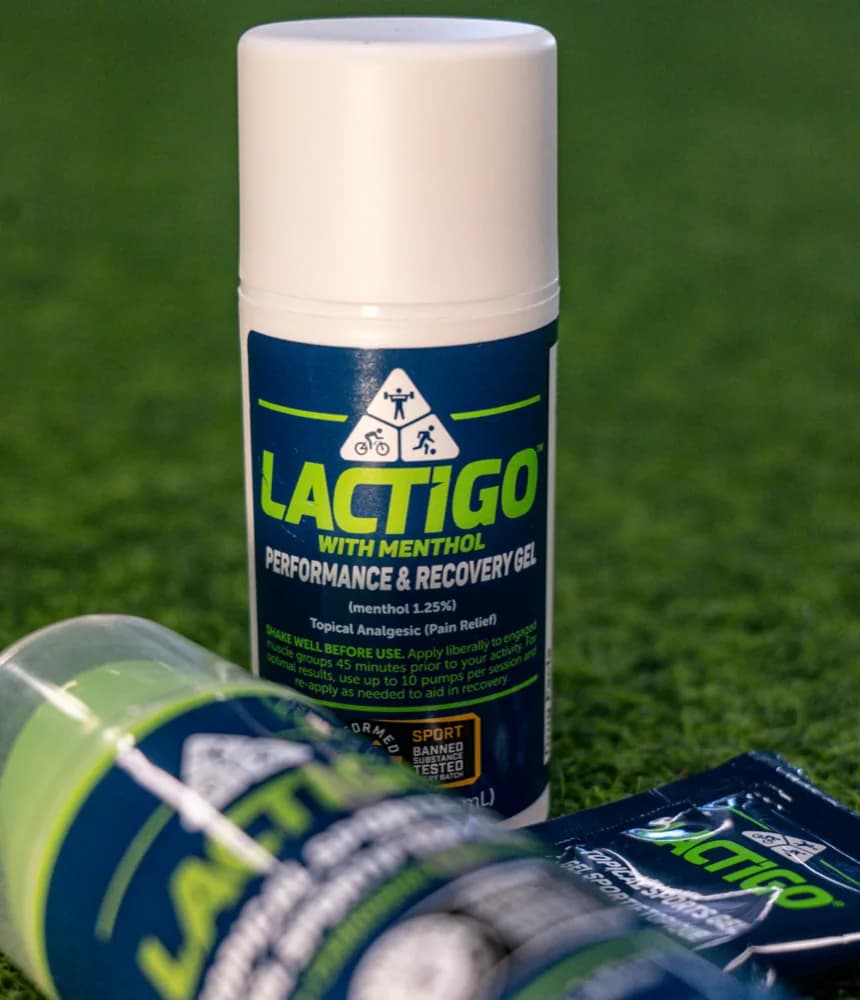
Ten pumps a leg, forty-five minutes out. That is the whole method.
$55with menthol · 100 ml · about 5 sessions
10% off your first order through our link · 30-day money-back guarantee
Affiliate links. We earn a commission if you buy — it costs you nothing extra and does not change what we publish.
- Informed SportEvery batch tested
- 30 daysMoney-back guarantee
- 16,500+Athletes, per the brand
- 45 minApply before training